What Actually Drives the Price of a Replacement
When owners ask New Albany Commercial Roofing for a per square foot number on a commercial roof replacement in New Albany, the truthful answer is that the range is wide because the work itself is wide. A straightforward single ply membrane on a clean, accessible warehouse can land in the seven to nine dollar per square foot neighborhood. A complex multi level building with heavy HVAC, parapet flashing, internal drains, and a tear off of two existing layers can push past fourteen or even sixteen dollars per square foot once you account for disposal, code mandated insulation upgrades, and the labor hours needed to detail every penetration correctly. Material choice carries weight too, because a TPO system priced for a budget bid behaves very differently over fifteen winters than a thicker mil version installed with proper fastening patterns. We break this down in more depth in our guide to TPO vs EPDM vs PVC commercial roof systems, which is worth reading before you sign anything.
The hidden costs are where bids tend to diverge most sharply. Two contractors can quote the same membrane on the same building and arrive at numbers thousands of dollars apart because one assumed the existing insulation was salvageable and the other planned to replace it. One assumed the deck was sound, the other built in contingency for rotted sections that will not be visible until the old roof comes off. When New Albany Commercial Roofing inspects a building in New Albany, we core the assembly in several spots, document moisture content, and write the proposal with realistic assumptions rather than optimistic ones. That approach sometimes makes our initial number look higher than a competitor's. It also means our final invoice tends to match the proposal, which is what most owners actually care about.
Code driven upgrades are another line item that surprises owners who have not replaced a roof in two decades. Current Indiana energy code often requires higher R values than what is sitting on your building today, which means an extra layer of polyiso, taller edge metal, and sometimes reworked rooftop curbs to accommodate the new height. Wind uplift requirements have also tightened, so fastener density and adhesive patterns on a 2024 installation look different than what was acceptable in 2004. None of this is optional, and a bid that does not account for it is a bid that will grow once the permit reviewer flags the assembly. We would rather have that conversation in the proposal stage than as a change order halfway through the job.
How Long the Project Really Takes
Timeline is the part owners underestimate most often. A small single tenant building of roughly ten thousand square feet, with no major complications, can be torn off and replaced in about a week of working weather. A mid sized facility in the twenty five to fifty thousand square foot range typically runs two to four weeks. Once you cross into large industrial roofs above one hundred thousand square feet, you are looking at six to twelve weeks of phased work, sometimes longer if the deck needs significant repair or if rooftop equipment has to be lifted and reset. Below is a rough picture of what we see across New Albany jobs in a typical year.
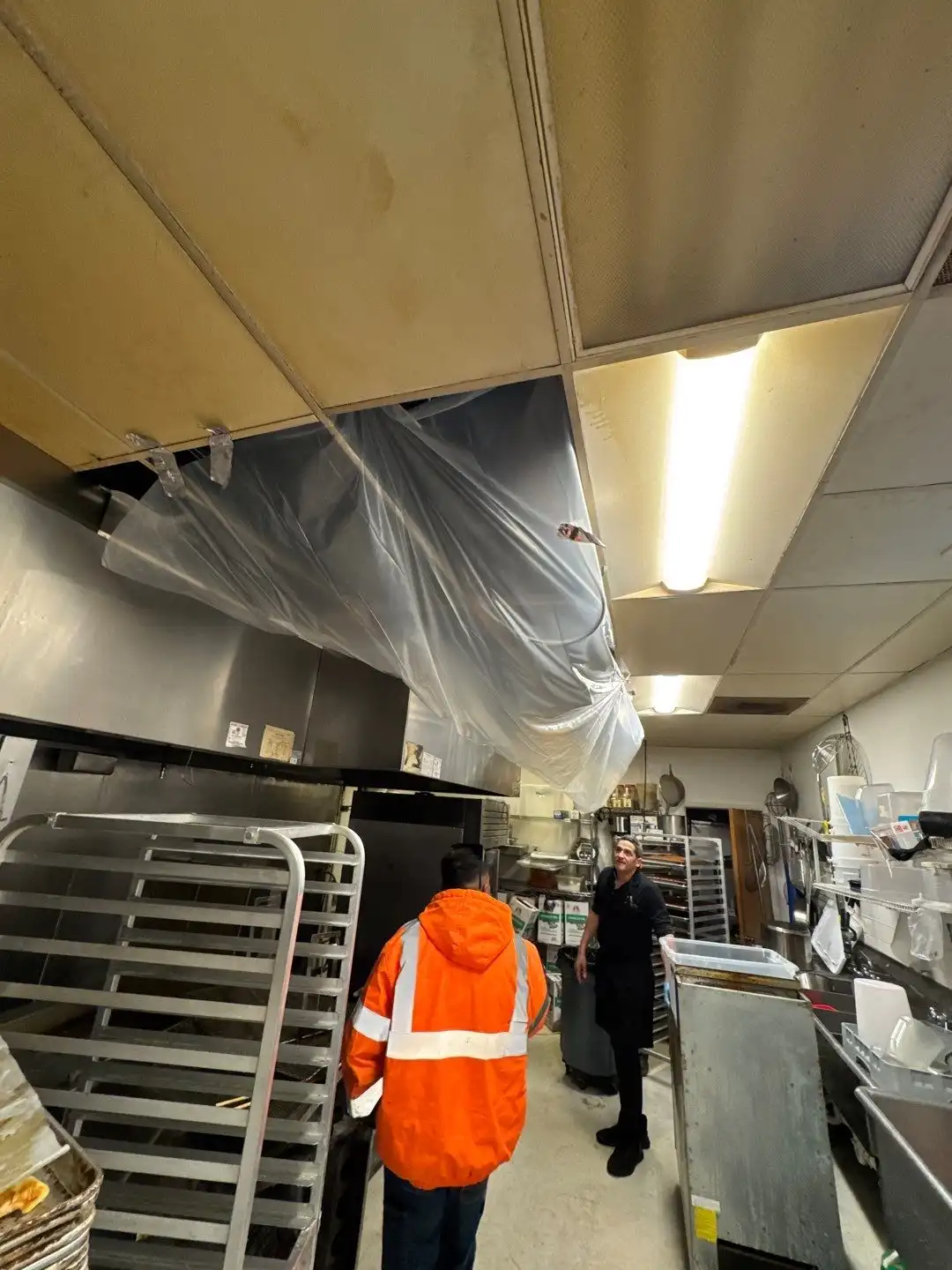
What the chart cannot show is weather. Central Indiana gives us roughly seven to eight months of reliably workable roofing weather, and even within that window a single line of thunderstorms can shut down a tear off mid afternoon and require dry in work before the crew leaves. When we schedule a New Albany project, we build buffer days into the calendar and we never strip more roof than we can make watertight by end of shift. That discipline matters because an exposed deck during a sudden downpour can create interior damage that costs more than the roof itself, and our background in water restoration has shown us exactly how fast a building deteriorates when water gets inside. If a leak does sneak through during construction or before we arrive, our commercial emergency roof repair team can dry in the area while the larger project continues.
Operational impact is the other side of the timeline question. Owners often assume their tenants or employees will notice nothing more than a few trucks in the parking lot, and then they discover that fastener installation directly above an open office sounds like a snare drum line and that adhesive odors can migrate through rooftop units into occupied space. We talk through these realities before the contract is signed, coordinate with facility managers on HVAC shutdowns during odor producing phases, and stage materials so loading dock access and customer entrances stay clear. For tenants on critical operations, we sequence work so the riskiest tear off areas happen on weekends or after hours when staffing allows. None of this is glamorous, but it is the difference between a project that ends with a handshake and one that ends with frustrated phone calls.
Replacement Versus Restoration and Repair
Not every aging roof needs to be replaced, and an honest contractor will tell you when restoration or targeted repair is the smarter spend. If your membrane is structurally sound but suffering from UV degradation, surface cracking, or failing seams, a coating system or scope of commercial roof repair may extend life another seven to ten years at a fraction of replacement cost. Replacement makes sense when the insulation is saturated, when the deck shows widespread deterioration, when you have already layered two roofs and code prevents a third, or when ongoing repair costs over the last three to five years have started approaching the amortized cost of a new system. We map these scenarios against your actual building and your actual budget, then give you the recommendation we would give a family member who owned the place.
Insurance and tax treatment also shape the decision. A storm related replacement may qualify for partial coverage, while a planned capital replacement is depreciated differently than a repair expense. We do not give tax advice, but we will document conditions thoroughly so your accountant and adjuster have what they need to make the right call for your business. When an active leak is part of the picture, we assess severity over the phone first, get an inspection on the calendar quickly, and prioritize tarping and dry in work so the interior stays protected while longer term decisions get made at a pace that fits your budget cycle rather than a panic timeline.